



Adelaide University Internship Experience - Grace Baek
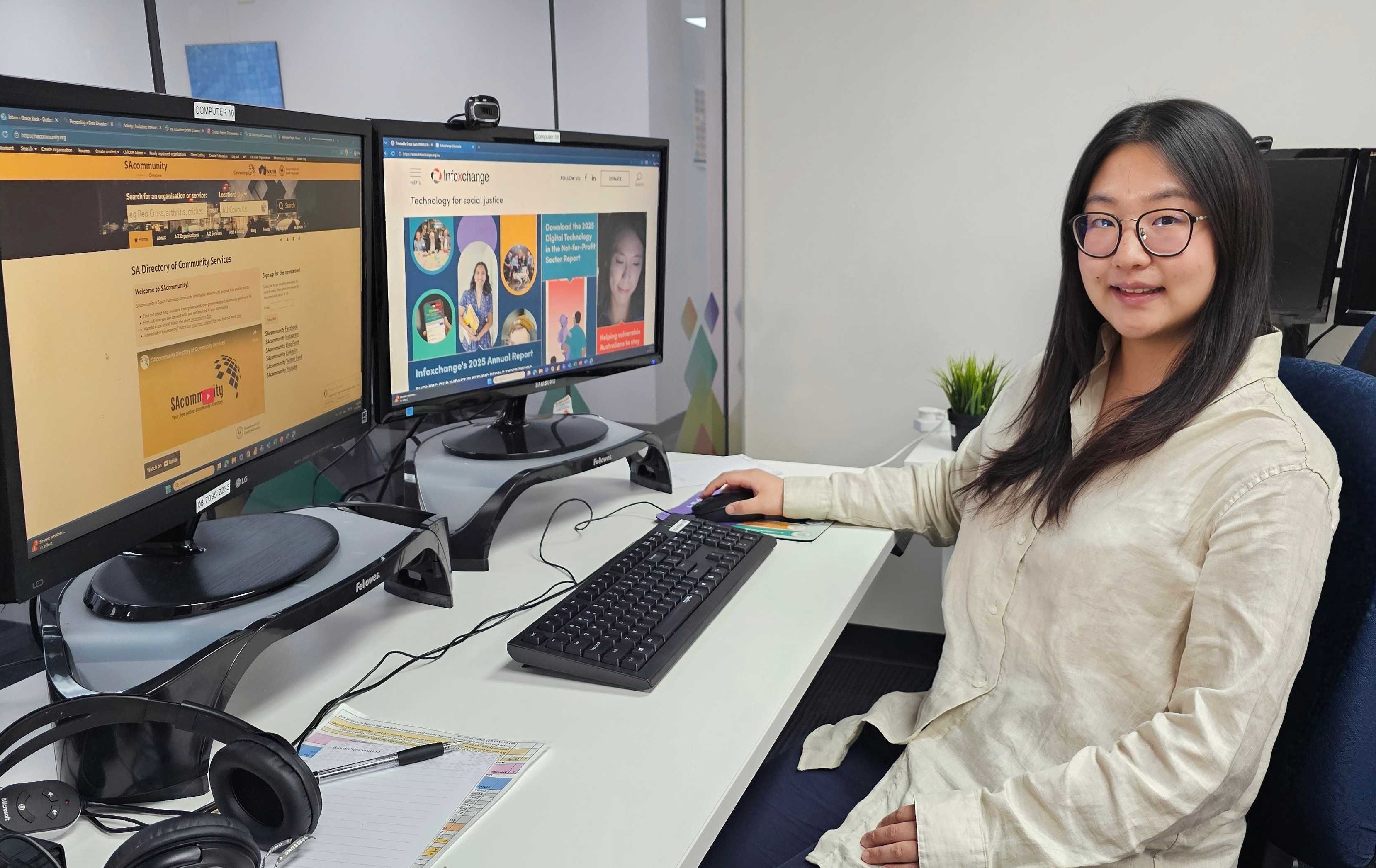
Welcome Grace!
Grace Baek has joined our Data Analytics Team for her Adelaide University ICT (Information and Communication Technology) Internship as part of her Bachelor of Computer Science, Semester 1, 2026, from 24 February 2026 to 26 April 2026.
She is completing a 150-hour onsite internship with SAcommunity at the Connecting Up Office, Infoxchange, working 2 days per week over 10 weeks.
Total Hours: 102 | Joined: 24 February 2026 | Last Check-in: 15 April 2026
Personal Biography
Grace is in her final year of a Bachelor of Computer Science (Cybersecurity) at Adelaide University. She initially studied a Bachelor of Physiotherapy (Honours) at the University of South Australia before discovering a strong interest in technology and cybersecurity, leading her to transition to Computer Science. This decision reflects her willingness to pursue growth and align her studies with her evolving professional goals.
Her background in Allied Health provides her with a unique interdisciplinary perspective, particularly in understanding healthcare systems, patient data sensitivity, and the importance of secure information management.
Currently, Grace works as a Student Library Assistant at Adelaide University, supporting students, staff, alumni, and community users as a frontline team member.
At Connecting Up, Infoxchange, she has joined the Data Analytics Team, where she is expanding her technical skill set in tools such as Power BI while strengthening her analytical and professional capabilities.
Grace aspires to build a career as a Cybersecurity or Data Analyst within the technology industry, with a long-term goal of contributing to whole-of-government outcomes and delivering meaningful impact for Australians.
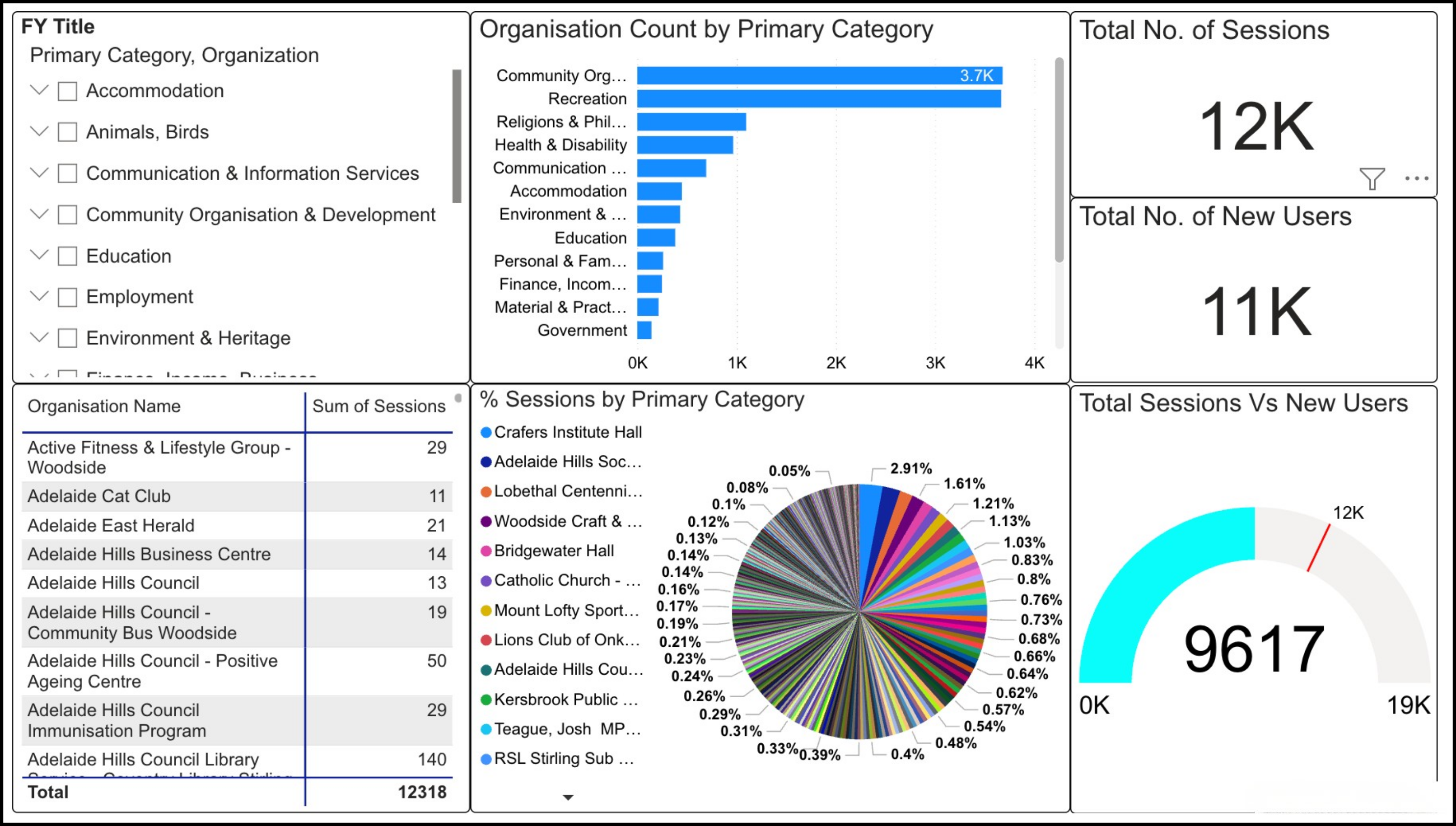 Image: Power BI Dashboard for Financial Years 2024-2025, Adelaide Hills
Community Services in Councils Project Single Financial Year Reports - Adelaide Hills
Grace selected Adelaide Hills Council for her Power BI council reports, developing a database of approximately 570 community services operating in the region across the 2022–2023 and 2024–2025 financial years. Her reports can be found >> here.
Prior to analysing and summarising data from multiple sources, it was essential to ensure that all records were accurate and up to date. Grace initially used Excel sorting functions to identify organisations with outdated or missing information based on their last updated date. For these records, she conducted manual validation by contacting organisations directly via phone and email, as well as cross-checking information through online research. This process ensured that the dataset reflected current and reliable community service information before further analysis and improved the overall consistency and integrity of the data.
The development of community service data presentations involved a multi-stage process. Data from Google Analytics and SAcommunity was analysed to identify trends, anomalies, and inconsistencies. These insights informed data cleaning and corrections, followed by iterative updates to the database and regeneration of Power BI and Canva reports to improve accuracy and reliability.
Finalised reports were published to the website and presented by Grace to Adelaide Hills Council stakeholders on 15 April 2026, with follow-up conducted to gather feedback and support ongoing refinement.
In addition, Grace developed a comprehensive dashboard summarising community service data for Adelaide Hills Council over a six-year period (2019–2025). This dashboard enables longitudinal comparison and deeper analysis of service demand trends across the region.
Council Contact
Grace engaged with Adelaide Hills Council in 2026 via email and phone to raise awareness of the SAcommunity service among key stakeholders, including staff involved in community consultation and development.
She presented her publicly available data reports as a complementary resource to support evidence-based understanding of community needs, and to enhance existing council planning and decision-making processes.
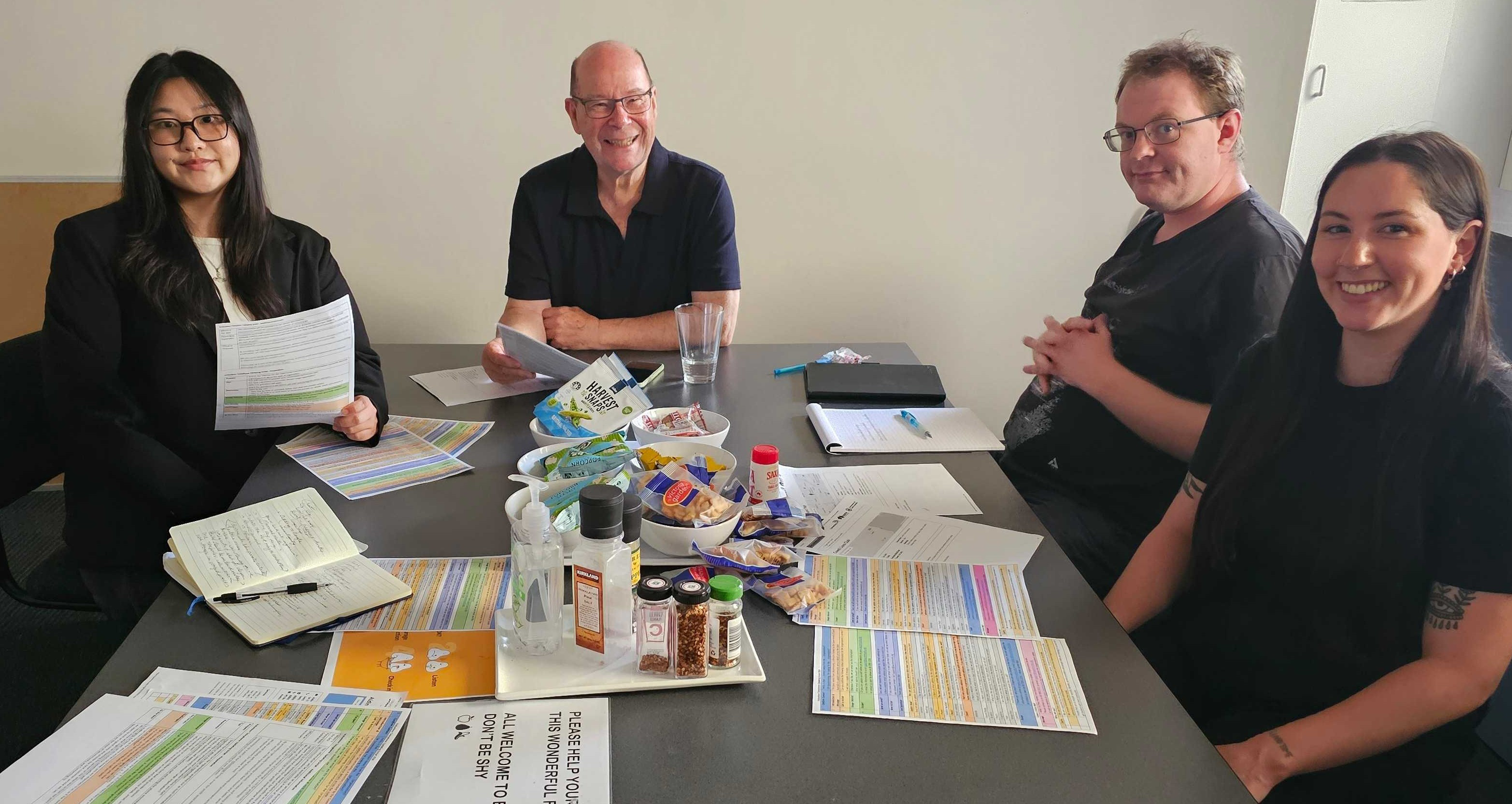 Image: Grace with Media & Communication Intern Erin and Volunteer Alexander practicing Telephone Techniques run by Volunteer David
Training and Development - Telephone Techniques Training 4 March 2026
The new interns participated in a Telephone Techniques Training session run by Volunteer David, the Customer Service and Information Management Team Lead. During the session, he shared valuable telephone techniques and demonstrated examples of effective phone calls. His key advice was to “keep calm, focused, and connected,” which are important skills to support Grace’s communication when contacting councils as part of her Councils Project.
Infoxchange (IX) Community & Cultural Events & Activities
 Infoxchange (IX) All Staff Town Hall Meeting 25 February 2026
Updates from the Infoxchange CEO, Operations, Finance, People & Culture, Lightning Talks from IX Teams, and IXCEL Awards.
This meeting began with CEO David Spriggs providing organisational updates, acknowledging the team's contributions and welcoming new staff members. Key topics discussed included the Digital Futures Initiative, the Customer Charter, Great Place to Work results, the hybrid way of working, business systems replacement, CCM process improvement, and overall financial performance. The session concluded with announcements of upcoming organisational events.
The meeting provided valuable insight into how the organisation operates at a strategic level. It highlighted how leadership communicates prorities and organisational goals across different departments. Observing updates from different teams helped demonstrate how diverse roles and teams work together to support the organisation's mission. This strengthened understanding of the importance of collaboration and communication across multidisciplinary teams in ensuring organisational success.

Image: International Women's Day Illustration created by Media and Communications Team Intern Erin.
International Women's Day Lunch 10 March 2026
International Women’s Day is an opportunity to recognise the women around us - their work, leadership, and contributions, and to reflect on fairness, opportunity, and belonging for everyone. To mark the occasion, we came together for an International Women’s Day lunch, a casual team gathering to celebrate together.
IX Stakeholder Events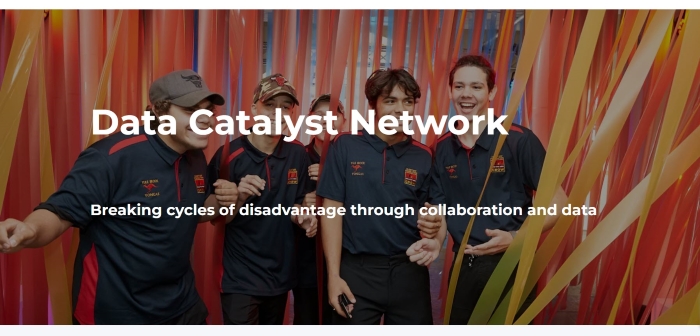 Data Catalyst Network (DCN): A collaborative network for NFP organisations that work together to improve how data is used to support children, families, and communities. It brings together organisations, academics, government bodies, and people with lived experience to share knowledge and strengthen data capability. Through initiative such as monthly webinars, members learn how to use data more effectively to improve services and outcomes.
Data Catalyst Network (DCN): A collaborative network for NFP organisations that work together to improve how data is used to support children, families, and communities. It brings together organisations, academics, government bodies, and people with lived experience to share knowledge and strengthen data capability. Through initiative such as monthly webinars, members learn how to use data more effectively to improve services and outcomes. DCN March Webinar: ABS Lifecourse Data Catalyst Network 3 March 2026
This webinar was an excellent opportunity to hear from The Australian Bureau of Statistics (ABS) Life Course Data Initiative (LCDI) Community Team about how they assist NFPs, and to learn about the LCDI.
The LCDI community team is helping communities find and access data, and build capability in using and interpreting data for local decision making.
We also got to hear some case studies that show how the LCDI community team has engaged with and helped communities. The presentation also included a demonstration of the new user-friendly interactive map and dashboard for community access-to-services data which has now been released.
 Image: Intern Grace with her Infoxchange Mentor Dr Kristen Moeller-Saxone, data capability lead at Infoxchange and head of the Data Catalyst Network.
Mentor Meeting
Mentor meetings provide an opportunity for mentees to connect with an Infoxchange staff member to discuss career pathways, gain advice on professonal development, and explore future opportunities. Grace met with Dr Kristen Moeller-Saxone, Lead Consultant for the Data Catalyst Network (DCN), to gain insight into her career journey, leadership experience, and perspectives of working in the data and social impact sector.
The discussion was guided by key questions focused on career development, skills, leadership, and advice for early-career professionals. Below are the key discussion points:
- What experiences or turning points led you to pursue a career in data and social impact?
- Looking back at your university and early career years, what skills or experiences best prepared you for your current role?
- From your perspective, what technical and professional capabilities are most important for becoming an effective data analyst?
- How did you develop your leadership skills throughout your career, particularly in leading initiatives like the Data Catalyst Network?
- What advice would you give to someone early in their career who is interested in using data to create positive social impact?
Overall, the mentor meeting reinforced the importance of combining technical expertise with human-centred thinking to create meaningful impact through data. It highlighted that career pathways are not always linear and that growth comes from remaining open to opportunities, continuously learning, and actively engaging with the professional community. The discussion provided valuable clarity on the skills, mindset, and experiences required to pursue a career in data analytics within the not-for-profit and public sectors.
Digital Training & Development
Volunteers and interns have access to the Infoxchange Digital Learning Centre, which offers live and recorded webinars, workshops, and web conferences delivered by subject-matter experts across a range of technology topics relavant to the Not-for-Profit (NFP) sector.
Grace actively selected and participated in relevant sessions, summarising key learnings and critically reflecting on how these insights could enhance her internship experience. The sessions attended included:
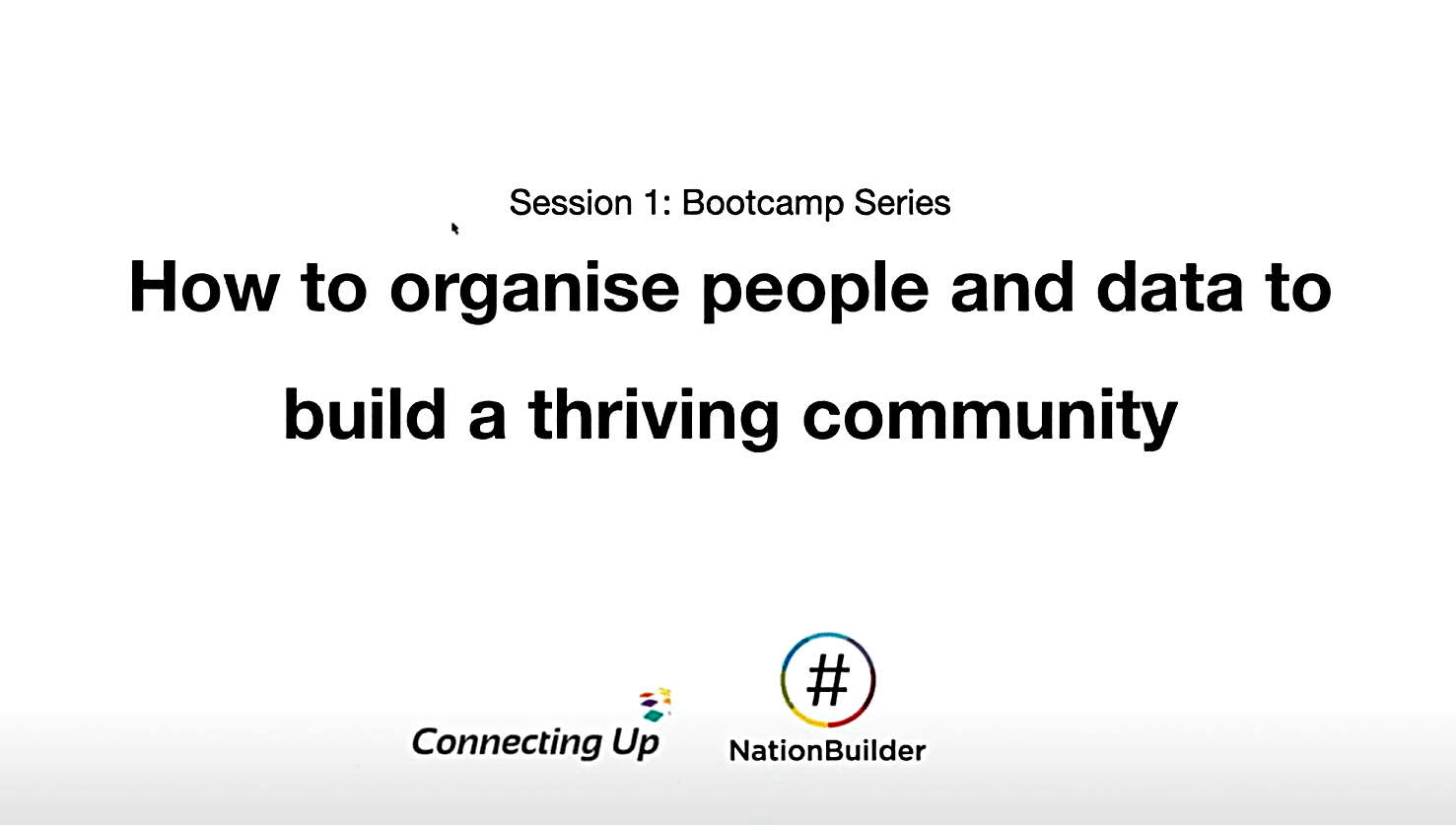
How to Organise People and Data to Build a Thriving Community
This webinar introduced the fundamentals of digital organising and emphasised that influence comes from trust, and trust is built through strong relationships. The presenters explained that in order to deepen relationships with supporters, organisations must "save" their relationships by storing supporter information in one central system rather than relying solely on social media platforms.
Key concepts included how and where to store data, how to organise supporter information effectively, and how to use the Ladder of Engagement to move individuals from one action to another. It was useful to see how the webinar highlighted the importance of converting followers into supporters through clear calls to action and dedicated sign-up pages.
A significant focus was placed on the use of tags as "digital sticky notes" to record how supporters have interacted with an organisation, such as event attendance or membership status. This allows organisations to communicate more personally and strategically, helping supporters feel recognised and valued.
Overall, the webinar reinforced how structured data practices and intentional engagement strategies can strengthen community relationships and support long-term engagement with the NFP sector.
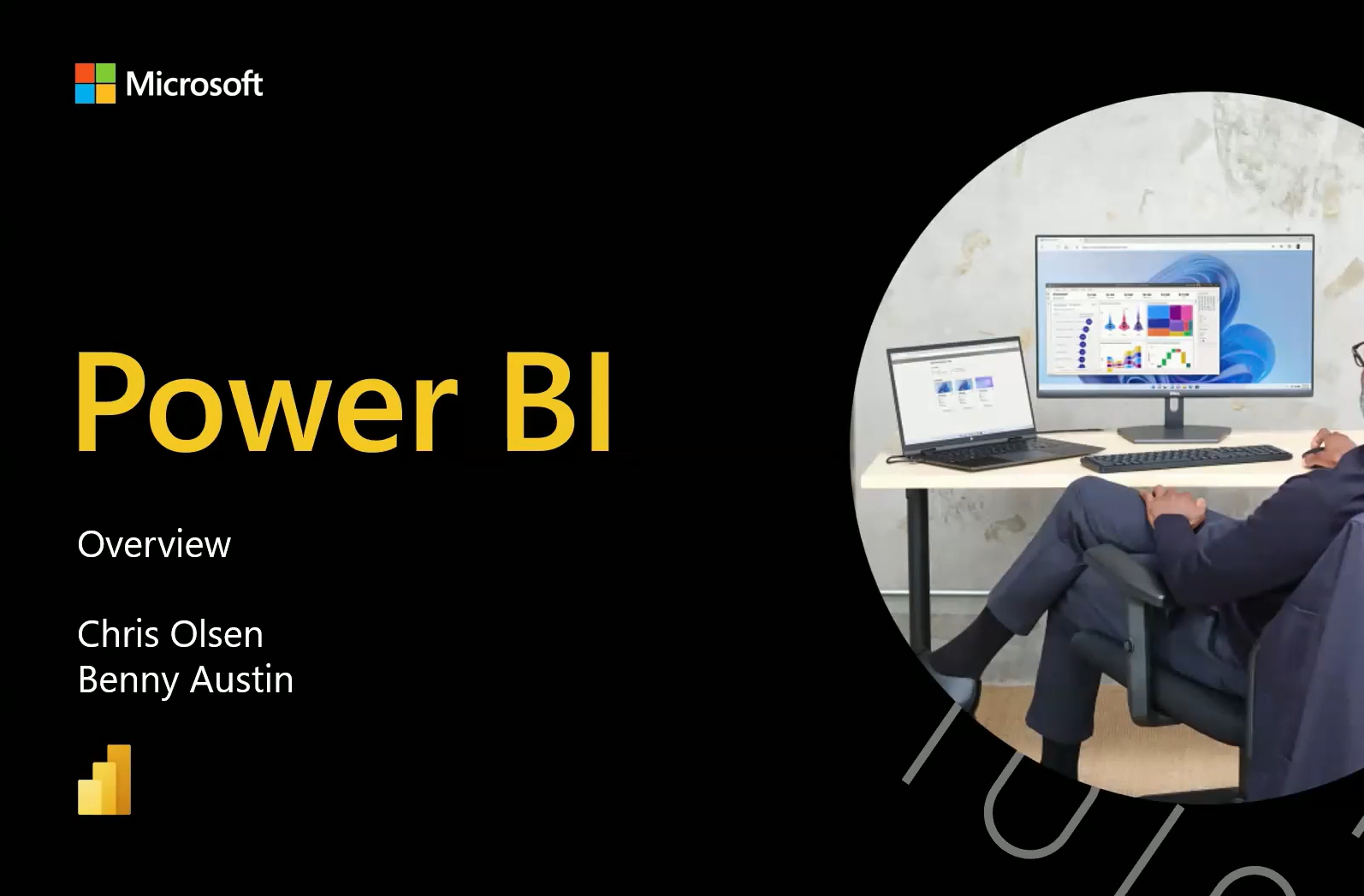
Getting Started with Data: Microsoft Power BI for Data Analysis
Grace had an opportunity to watch a recorded webinar about Microsoft BI for data analysis presented by guest speakers from Microsoft. By the end of the webinar, she enhanced her data analysis capabilities and unlocked valuable insights from data which she plans to utilise when commencing her Councils Project Report.
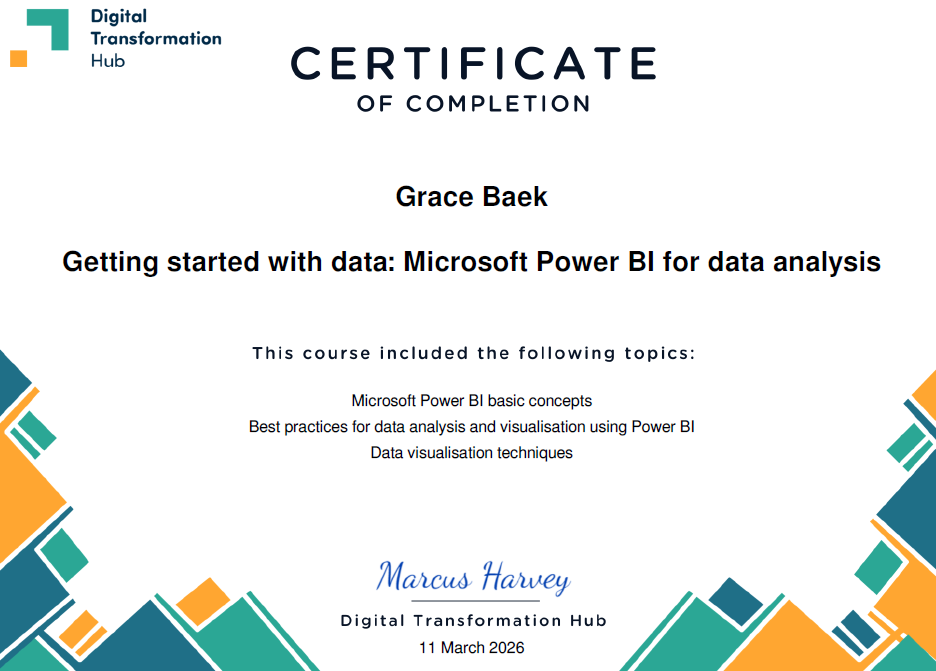
Image: Getting Started with Data - Microsoft Power BI for Data Analysis Certificate
Getting Started with Data: Hands-on with Microsoft Power BI for Data Visualisation
Grace had an opportunity to learn the basics of Microsoft Power BI before she started her Councils Project. This recorded webinar was an interactive session where she got to learn how to transform data into compelling visual stories.
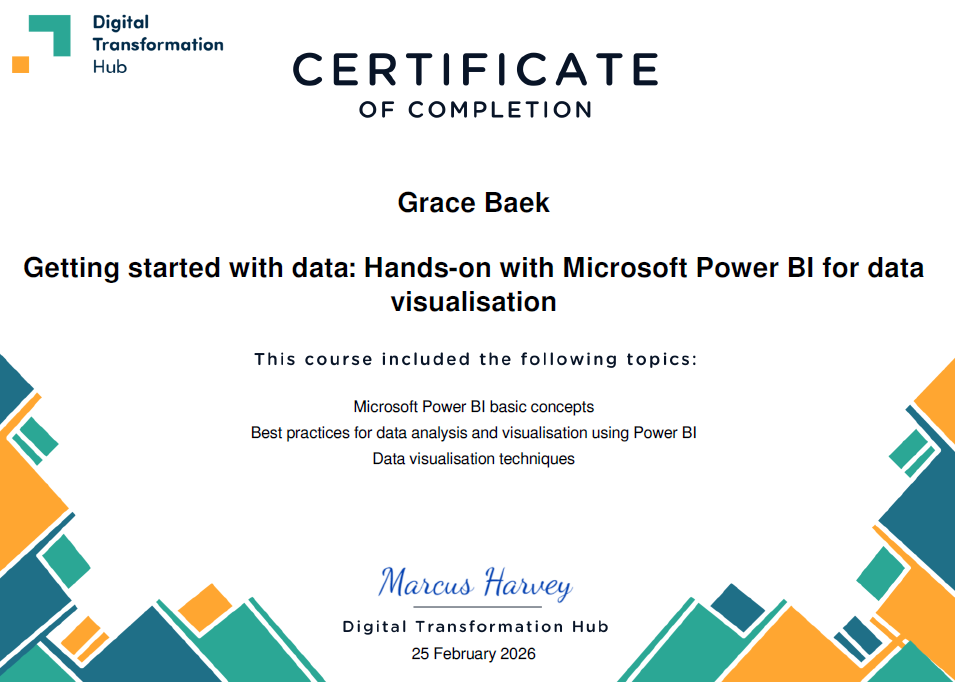
Image: Getting Started with Data - Hands-on with Microsoft Power BI for Data Visualisation Certificate

The Human Side of CyberSecurity
Grace attended a webinar presented by Gemma, a Digital Transformation Consultant at Infoxchange, which explored the human side of cybersecurity and highlighted the critical role people play in organsiational security. The session emphasised that cyber risk is not only a technical issue but a shared responsibility across the entire organisation, especially within a NFP sector where limited resources, high trust environments, and increasing digital reliance create unique vulnerabilities. A key insight was that a large proportion of cyber incidents, often around 88 percent, involve some form of human error, as attackers increasingly exploit psychological triggers such as fear, urgency, trust, and cognitive overload rather than attempting to break technical systems. Importantly, the webinar reframed humans not just as a risk but as a powerful first line of defence when supported through education, awareness, and a strong blame free culture. By encouraging early reporting, fostering psychological safety, and embedding continuous and practical training, organisations can strengthen their human firewall and significantly reduce the impact of cyber threats.
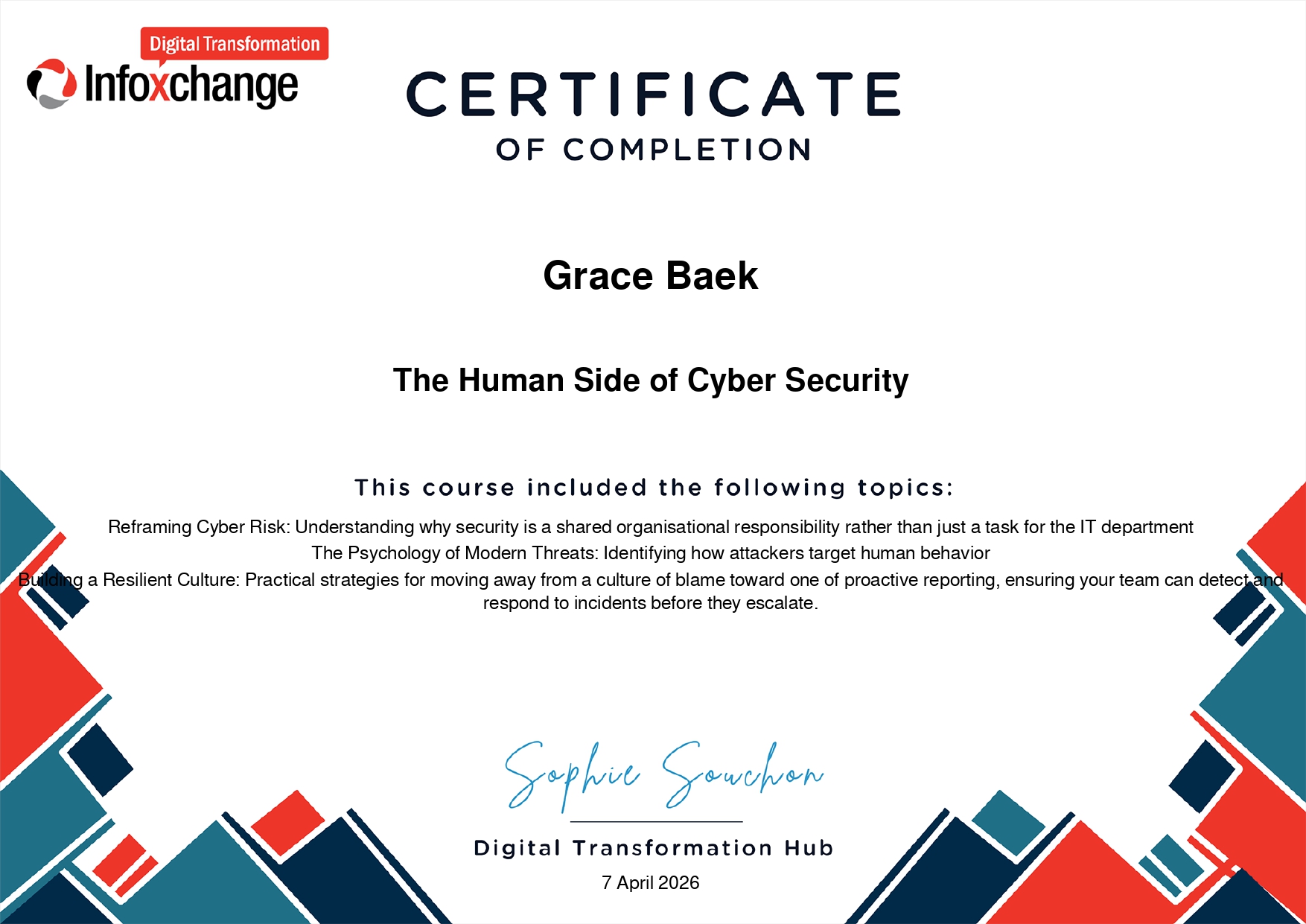
Image: The Human Side of Cyber Security Certificate
This page reflects the author’s personal experience as an intern.
