



SAcommunity Media & Communications Team - Internship or Placement Position Description
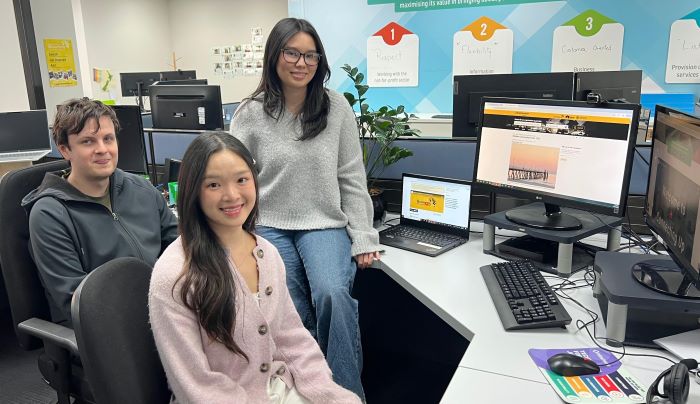
Media and Communication Team Members:
Volunteer Dylan Reed, Interns Glanice Song Ling Tan and Bethany Sweet
Brief Placement Overview and Details
Please find details of the placement/internship opportunity here:
Placement name/group:
SAcommunity Media and Communications Team
About the organisation:
Infoxchange https://www.infoxchange.org/au is a not-for-profit social enterprise that has been delivering technology for social justice since 1989. With over 140 staff across Australia, with branches in Melbourne, Brisbane and Adelaide, we tackle the biggest social challenges through the smart and creative use of technology.
Connecting Up https://www.connectingup.org is a service of Infoxchange based in Adelaide, and provides a variety of technology-based information, products, training and services for the not-for-profit sector in Australia and New Zealand. A member of the TechSoup Global Network, http://www.techsoup.org/ all partners are leading civil society organisations and manage a range of capacity building programs in their countries.
Established in 1981, SAcommunity https://sacommunity.org is a free, online community information service supported by the Government of South Australia https://www.sa.gov.au/topics/about-sa/directories/community provided by Connecting Up, a service of Infoxchange.
Placement Overview (brief/broad overview)
Applicants will join the SAcommunity Media and Communications Team to assist in promoting local community services, activities and events through our capacity-building eNews campaigns and social media channels.
Visit https://sacommunity.org/mediacommunicationsteam for a more detailed overview of the role and activities.
Applicants will:
- Understand the importance of accurate community information
- Learn more about the community and not-for-profit sector
- Practice information and digital literacy skills
- Learn basic skills and tools of social media campaigns (Facebook, Instagram, X (Twitter), LinkedIn)
- Assist in maintaining set social media / communications schedule
- Learn basic skills for conducting interviews and content writing (Microsoft Teams)
- Assist in creating/maintaining blog/case study uploads to website (SAcommunity Blog) curated for social media platforms
- Assist in maintaining calendar events uploads to website (SAcommunity Blog)
- Learn basic skills and tools of email marketing campaigns (Canva, BeePro, Campaign Monitor)
- Produce one digital newsletter by the end of the internship based on SAcommunity blog content
- Analyse the results of your blog articles, media campaign (Google Analytics, Campaign Monitor)
Placement Details (brief, core tasks and responsibilities)
An overview of the Media & Communications Team is here https://sacommunity.org/mediacommunicationsteam
Infoxchange Workplace Induction:
Understanding the Community and Not-for-Profit Sector (Stakeholders), Community Information (Objective) & SAcommunity (Tool)
Introduction to Media & Communications Project Plan, Role, Team, Mentor, Training and Tech Tools
Project Activity:
Create/collate content for the monthly SAcommunity eNews campaign in Canva for visuals, BeePro for design and Campaign Monitor for distribution. Curated content for the SAcommunity eNews and social media channels is initially researched, interviewed/developed, planned, written and published by students as stories within the SAcommunity Blog and includes community sector news articles, an event/activity calendar, not-for-profit features and an intern piece.
Other tasks:
- Build your Personal Brand, elevator pitch
- Maintain an online Personal Portfolio of your experience, tasks and work for study/future employers
- Undertake Mentor interview program preparation, recorded meeting, feedback form, and takeaway summary
- Attend/Participate in selected relevant Media & Communication Training & Education webinars/workshops
- Attend/Participate in 1:1, Team, Divisional, Organisation meetings, People & Culture activities and events
- Actively facilitate connections and networks with staff, team members and stakeholders
- Prepare and Complete Internship Review, Evaluation and Exit Interview
Find out further information about the Media and Communication internship from the following links:
Media and Communication Team (Overview) https://sacommunity.org/mediacommunicationsteam
Current and Former Interns/Volunteers Media and Communication Team Experience Stories
More about the SAcommunity Volunteer and Intern program and contacts can be found here:
SAcommunity Volunteer and Intern Program https://sacommunity.org/volunteers
SAcommunity Volunteer and Intern Program https://sacommunity.org/volunteers
Roles available https://sacommunity.org/volunteerroles
Benefits https://sacommunity.org/volunteerbenefits.
Benefits https://sacommunity.org/volunteerbenefits.
Including access to the Infoxchange Digital Tranformation Hub https://digitaltransformation.org.au/ and
Mentorship interview program https://sacommunity.org/mentor
Mentorship interview program https://sacommunity.org/mentor
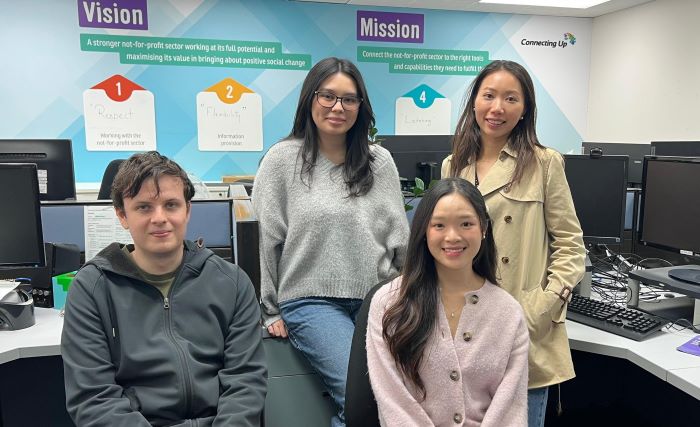 SAcommunity Media & Communication Team
Volunteer Dylan Reed, Interns Bethany Sweet, Glanice Song Ling Tan and Staff Member Chloe Le, Marketing Coordinator - Products and Services • IX : Strategic Partnerships & Communications. Chloe along with Sam Lloyd Portfolio Marketing and Brand Experience Lead • IX : Strategic Partnerships & Communications are available for interview and to assist the team.
________________________________________________________________________
Detailed Placement Overview & Details
Placement overview (an overview of the role)
SAcommunity Media and Communication Team https://sacommunity.org/mediacommunicationsteam
About the project:
Students will create and publish stories which feature, promote and connect community, service providers and support local government engagement, by providing information relevant to the community and not-for-profit sector in South Australia. Students will write blog articles for the SAcommunity website, curating this content across social media channels towards building and completing a monthly digital newsletter, using Canva for visuals, BeePro for design, and Campaign Monitor for distribution.
Students will create and publish stories which feature, promote and connect community, service providers and support local government engagement, by providing information relevant to the community and not-for-profit sector in South Australia. Students will write blog articles for the SAcommunity website, curating this content across social media channels towards building and completing a monthly digital newsletter, using Canva for visuals, BeePro for design, and Campaign Monitor for distribution.
What is SAcommunity?
SAcommunity https://sacommunity.org/ is a service providing a free, online community information directory alongside an accompanying community sector news service. SAcommunity provides information and awareness on government, not-for-profit and community services in South Australia to enable people to find the help and assistive services they need, and that allow them to participate in everyday life.
News stories and storytelling articles assist not-for-profit organisations and charities to promote themselves, reach new audiences, cause supporters and potential members, provide opportunities for service partnerships and networks, and access funding or grants.
What is the SAcommunity Information Directory?
The SAcommunity directory consists of ~15,500 community information records which describe resources that meet the information needs of a community and include details of: Organisations (associations, groups and clubs); Programs or services (childcare, food assistance), Events (annual fairs, shows and festivals) and Other resources (facilities, sports centres). This continually maintained, summarised, and structured open information is held under a Creative Commons Attribution License for public benefit, receiving ~1,696,000 views a year.
Why is SAcommunity media and communication significant?
Community Information documents and reflects life, the media and communication team create compelling content for the SAcommunity website blog and a monthly digital newsletter, to both inform and enhance visibility for the ~15,500 listed services and organizations across the state. Community services and service demand is impacted by and emulated in the changes in social conditions, economic development, demographics, and cultural diversity of the population they serve, and storytelling articles reflect and at times influence these changes.
Media activities are particularly important for those smaller but vital groups who lack a web presence and the tools, skillsets, time and reach on social media, allowing them a platform to tell their story. These activities have a wider outcome of increasing the awareness and impact of not-for-profits, encouraging social participation and increasing the public’s access to assistive services, thus building resilient connected communities.
Who is the audience?
SAcommunity online blog and eNewsletter subscribers consisting of a broad range of people from government, councils and public libraries, who utilise directory information for referrals (assistance), communication (e-campaigns), consultation (engagement, partnerships) and research, as well as people working for community service providers (creating awareness), and the public (with links to support services, encouraging community participation). Accessible, accurate community information is key to strengthening engagement between local government associations and the community sector, and Media stories assist in the discovery of 'who is doing what, where' in the not-for-profit sector.
What content is created, and what are the processes?
Students undertake a structured content creative process which includes: Story selection, choosing a organisation from the SAcommunity database to feature; Research and interviews, gathering information through email, phone interviews or media forms to highlight activities and services; Content creation, writing storytelling articles to raise the profile of local community groups, and calendars to promote community participation; Design and Visuals, using Canva to create photo collages and visuals for articles; eNewsletter collation, using BeePro to arrange stories and calendars into a monthly eNews format, imported into Campaign Monitor for distribution to subscribers, and Social Media Management, sharing the blog posts across social media channels (Facebook, Twitter/X, LinkedIn)
Why create community sector media stories for local government?
Councils are established by state government to look after the needs of a local community. The SAcommunity program is supported by the state government, with community information directory records comprehensively describing in brief directory format, the types of community resources available for the public. Media stories featuring community service providers, their operations and how they meet their community needs, bring an awareness to inform decision-making and strategic planning. This can allow councils to invest in resources and initiatives to improve services often through community grants and partnerships, to better meet their community needs.
How are the stories tagged for accessibility into subjects, categories and government divisions?
Each blog story contains multiple subject fields to break down the various attributes of the story into specific separate pieces of information, stories are both attached to the community record they feature, with some of the stories indexed using relevant tags from these records which are further indexed and segmented into multiple categories and subjects.
These categories include government divisions with records grouped into the population-based, geographic boundaries used by the three levels of government in Australia (local, state and federal). In South Australia there are 68 Local Government Councils, 47 State Electoral Districts and 10 Federal Electoral Divisions. These boundaries create groupings to identify individual community services (i.e. Fred’s Van) and broader service categories (i.e. Food assistance) operating within and between councils. These tags create another access point for people to find out more about the story of an organisation.
What are my project roles and responsibilities?
Students, as part of the Media and Communication Team, select one month and create and publish ~5 blogs and one monthly calendar on the SAcommunity website, utilising this same curated content across the SAcommunity social media channels and for the eNewsletter. Students use documented interview instructions, given templates, tools and platforms; Office365 (Outlook, Excel, Teams), CiviCRM database, Canva, BeePro, Campaign Monitor as well as Google Analytics to measure the success and response to the media campaigns.
What is the deliverable and benefit for me?
Stories are published on SAcommunity, are attributed to the student creator and provided with a unique link to a portfolio of their work that can added to portfolios, resumes or LinkedIn profiles and be presented as a case-study, providing evidence of work and demonstrable skills for future employers.
How can I have impact?
Presenting community information service stories in an accurate, accessible, and understandable way assists government, councils, and public libraries to understand local community needs. This work provides an awareness of locally based services that exist to assist decision-makers in serving their population effectively and also allows for the involvement of local services in designing, shaping and delivering programs, grants and wellbeing strategies which are beneficial for the whole community.
In addition, part of the documented processes, involve accessing, assessing, contacting, and presenting news, with the practice of story creation improving database information for the public, as any updates, changes and anomalies found and corrected for the article are applied to the public-facing database.
Project Scope/Key tasks and responsibilities:
- Understand the importance of accurate community information
- Learn more about the community and not-for-profit sector
- Practice information and digital literacy skills
- Learn basic skills and tools of social media campaigns/platforms (Facebook, Instagram, X (Twitter), LinkedIn)
- Assist in maintaining set social media schedule
- Learn basic skills for conducting interviews and content writing (Microsoft Teams)
- Assist in creating blog/case study uploads to website (SAcommunity Blog) curated for social media platforms
- Learn basic skills and tools of email marketing campaigns (Canva, BeePro, Campaign Monitor)
- Produce one digital newsletter by the end of the internship based on SAcommunity blog content
- Analyse the results of your blog articles, media campaign (Google Analytics, Campaign Monitor)
